Best Time to See Mt Fuji
When is Mt Fuji visible? 35 years of daily 8 a.m. counts: about 6 mornings in 10 in December and January, 1 in 10 in July. Months, time of day, what tours do if it hides.
The best time to see Mt Fuji is from November to February, early in the day: on Fuji City’s 35-year record, the whole mountain was visible at 8 a.m. on about 6 mornings in 10 in December and January, and on about 1 in 10 in July. Summer is the worst season for the view, spring is hazy, and September brings typhoons. A day trip from Tokyo cannot choose the weather, so the one thing you can control is the month, then how easily you can move the date. The classic lake day is from US$49 a person in current promotion (usually US$82) (checked October 2026).
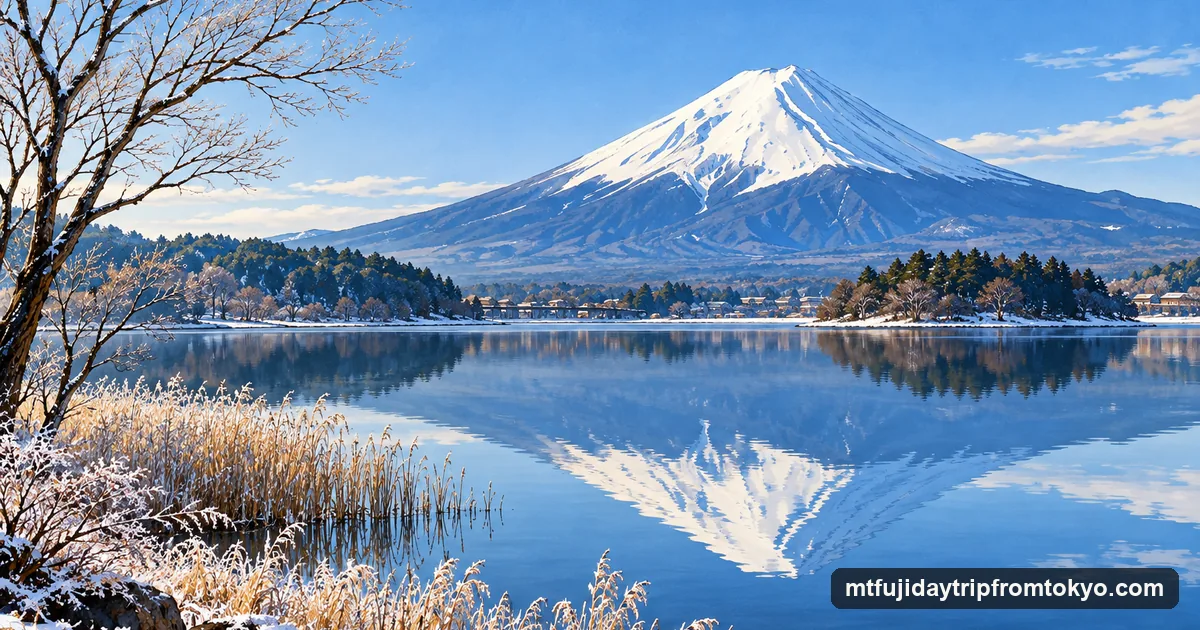
How often Fuji shows itself, month by month
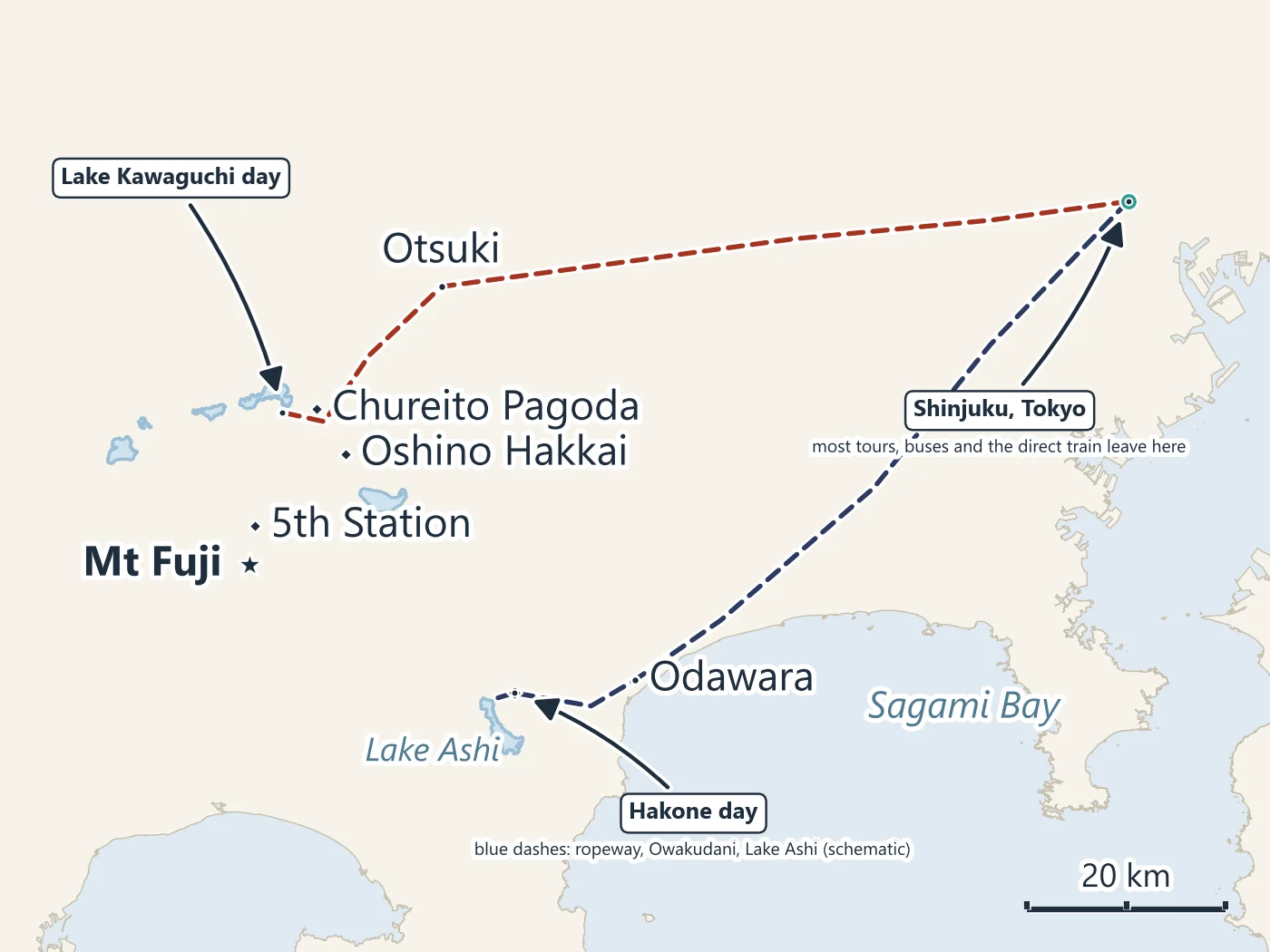
Fuji City, on the mountain’s south side, has recorded every morning since 1991 whether the mountain is fully visible, partly visible or hidden. These are its averages for 1991 to 2025, read at 8 a.m.:
| Month | Whole mountain visible at 8 a.m. | Days a month, on average |
|---|---|---|
| January | 60% | 19 |
| February | 53% | 15 |
| March | 41% | 13 |
| April | 36% | 11 |
| May | 30% | 10 |
| June | 12% | 4 |
| July | 10% | 3 |
| August | 15% | 5 |
| September | 27% | 8 |
| October | 41% | 13 |
| November | 54% | 17 |
| December | 62% | 20 |
On a phone, swipe the table sideways for the day counts.
Source: Fuji City, “Record of Mt Fuji observations”, averages for 1991 to 2025, read in October 2026.
Lake Kawaguchi is on the north side, about 40 km from Fuji City across the mountain, so a given morning can differ between the two. The pattern across the year is the same one every Fuji guide repeats, and these counts are the longest public record behind it.
A single year reads the same way. In 2025, Fuji City saw the whole mountain at 8 a.m. on 136 days: 22 in February and 19 in each of January, November and December, against 2 in June and 3 in August.
The month for each kind of trip
- December to February: the clearest air and the most snow on the summit. The trade-off is cold (see below) and short days. Winter day trips covers the roads and ropeways that close.
- November: clear, and autumn leaves around Lake Kawaguchi. Visibility is already above half of mornings.
- March to May: cherry blossom and haze. The view is less likely but the season is the draw; the classic picture is the Chureito Pagoda above Fujiyoshida, 398 steps up, framed by cherry trees.
- June to September: the mountain hides more often than not. This is the climbing season (the Yoshida Trail is open from 1 July to 10 September in 2026), but a day trip for the view is a gamble. If you go in summer, keep the date flexible.
Morning beats afternoon
Fuji City also reads the mountain at noon and 4 p.m.: over 35 years the whole mountain showed at 8 a.m. on 37% of days, at noon on 23% and at 4 p.m. on 22%. A day trip from Tokyo cannot be at the lakes at 8 a.m.: the classic coach day leaves Tokyo Station at 8:00 and Shinjuku at 8:30, and the ride takes about 2 hours. A night at Lake Kawaguchi is the only way to be there for the clearest hour.
What the tours do when Fuji hides
Tours run whatever the cloud: the coach, the guide and the stops are the product, and the view is not guaranteed. On one of the big coach days, no refund applies if the tour runs and the mountain stays hidden. Itineraries also change with the season and the traffic: the same tour goes to the 5th Station in its operating season and to the Mt Fuji Museum outside it. The practical rule: book a date with free cancellation (the coach days here allow it up to 24 hours before), check the forecast for Lake Kawaguchi two or three days out, and move the date if it says cloud all day. Of the newest 350 reviews of the classic lake day, read on 29 October 2026, 327 give five stars.
Check dates for the Kawaguchiko day →
How cold it gets by the lake
Lake Kawaguchi sits at about 860 m, and it is colder than Tokyo. The Japan Meteorological Agency’s 1991 to 2020 normals for its Kawaguchiko station:
| Month | Average high | Average low | Rain or snow |
|---|---|---|---|
| December | 8.5°C | -2.9°C | 50 mm |
| January | 5.5°C | -5.7°C | 61 mm |
| February | 6.6°C | -4.8°C | 55 mm |
| April | 16.1°C | 3.7°C | 106 mm |
| July | 27.2°C | 18.0°C | 178 mm |
| October | 18.3°C | 8.7°C | 230 mm |
The clearest months are also the driest and the coldest. Dress for below freezing on a winter morning by the lake, and colder again on any higher viewpoint.
Visibility from Fuji City’s “Record of Mt Fuji observations” (1991 to 2025 and 2025, 8 a.m. readings) on the city’s website; climate from the Japan Meteorological Agency’s 1991 to 2020 normals for Kawaguchiko; the 2026 climbing season from Yamanashi Prefecture’s 2026 Mt Fuji climbing page; the Chureito Pagoda steps from the Fujiyoshida tourist guide; all read in October 2026. Tour price and reviews from the GetYourGuide listing and its newest 350 reviews, read on 29 October 2026.
Book a Clear-Season Day
The Kawaguchiko day from Shinjuku: Nenba village, Lake Kawaguchi and Oishi Park, Oshino Hakkai and the Chureito Pagoda, with a guide and a coach seat both ways. Check the free cancellation window on the listing, then watch the forecast.
Check Dates