Mt Fuji Day Trip in Winter
A winter Mt Fuji day trip from Tokyo: the clearest views of the year, below-freezing mornings, the 5th Station road on snow days and the Hakone Ropeway closures of Dec 2026 to Feb 2027.
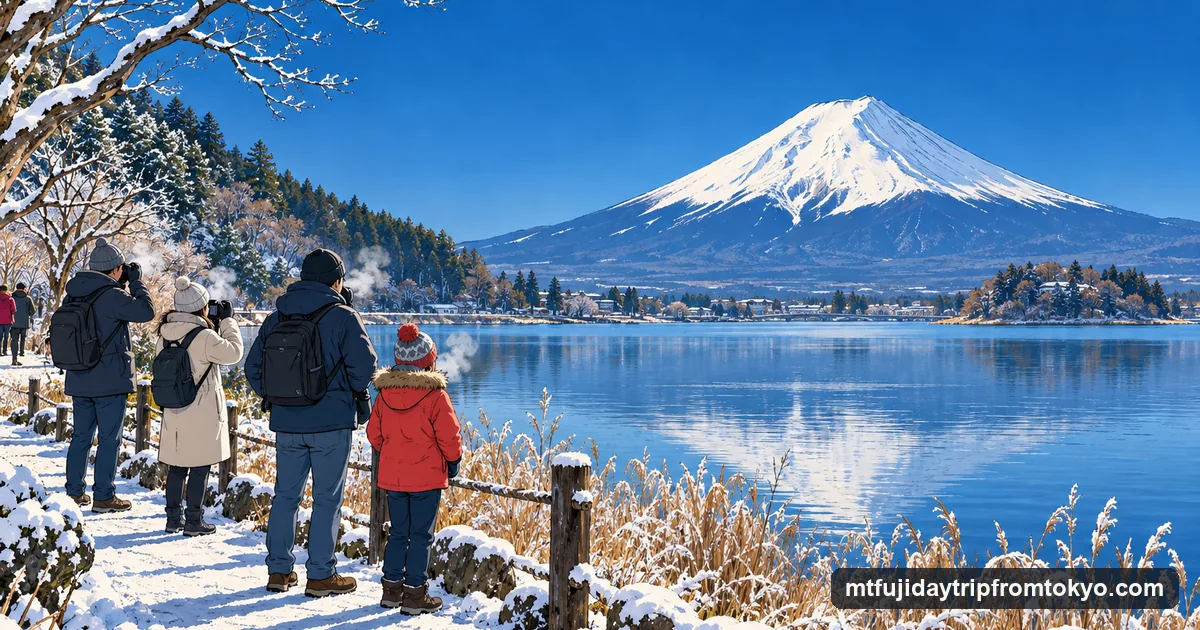
Winter is the best season for a Mt Fuji day trip from Tokyo if the view is the point: from December to February the whole mountain is visible on more than half of mornings, against about one in ten in July. The cost is cold and a few closures. By Lake Kawaguchi, January averages a high of 5.5°C and a low of -5.7°C; the road up to the Fuji Subaru Line 5th Station can close on snow days; and in Hakone, sections of the ropeway stop for maintenance from 7 to 24 December 2026 and from 12 January to 26 February 2027. A lake day is the safest winter choice: the classic one is from US$49 a person in current promotion (usually US$82) (checked October 2026).
Why winter is the clear season
Fuji City has counted the mornings the mountain shows itself since 1991. On its 1991 to 2025 averages, the whole of Mt Fuji was visible at 8 a.m. on 62% of December mornings, 60% in January and 53% in February, the three best months of the year. Summer is the opposite: 12% in June, 10% in July. The best time to see Mt Fuji has every month.
Snow helps the picture too: the white cap that makes the postcard view is there all winter.
What closes or changes
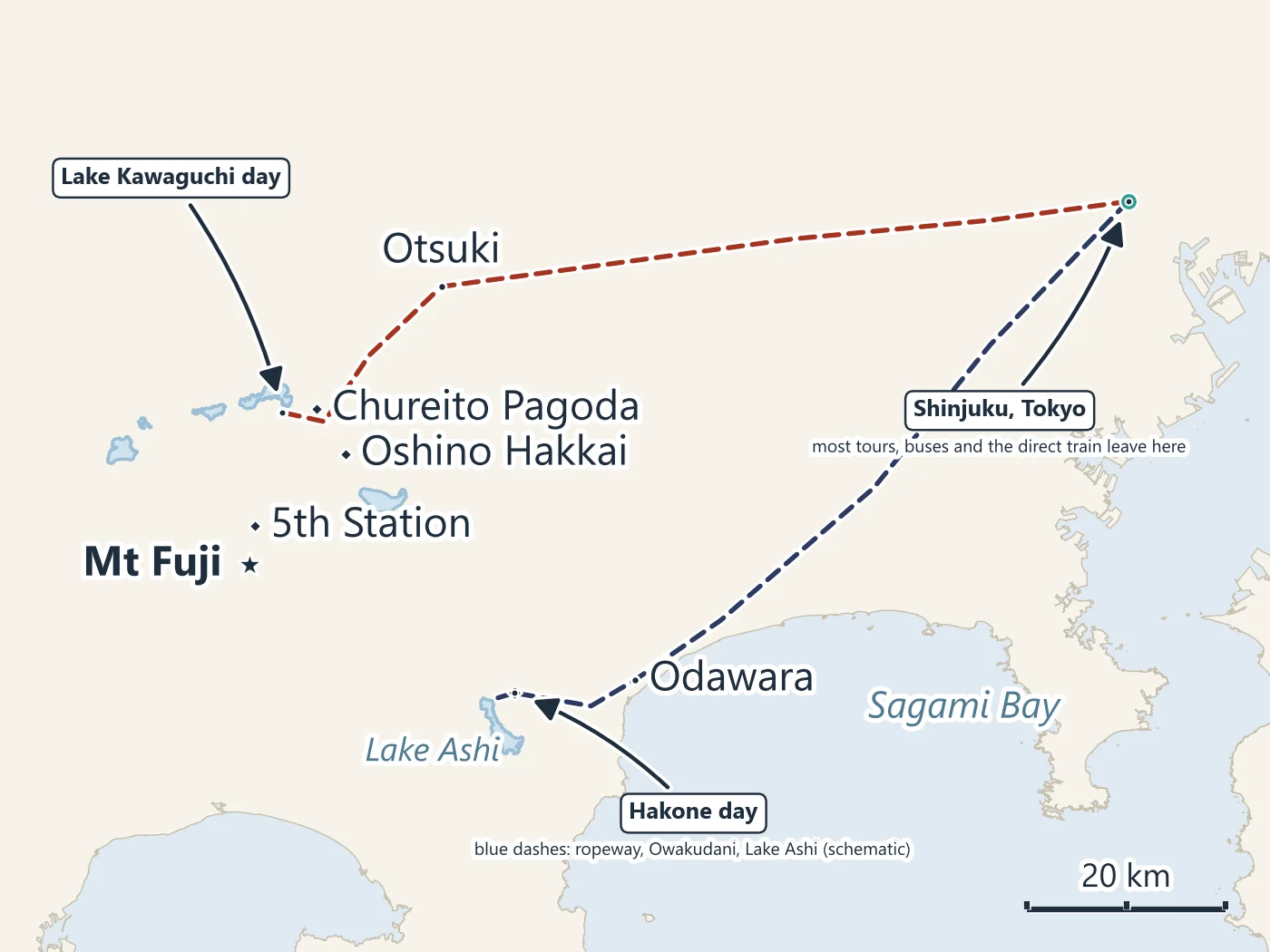
The 5th Station road. The Fuji Subaru Line climbs from the lakes to the 5th Station, and in winter it closes, all the way or part of the way, on days of snow and ice. Fujikyu runs its buses to the 5th Station in the summer season only, not in winter. So a winter itinerary that lists the 5th Station may not get there on the day; read the listing for what replaces it.
The Hakone Ropeway. Odakyu Hakone has announced maintenance closures with replacement buses running about every 15 minutes:
- Owakudani to Sounzan: 7 to 24 December 2026
- Togendai to Ubako to Owakudani: 12 January to 26 February 2027
A Hakone day such as the Mt Fuji, Hakone Ropeway and Lake Ashi tour rides that ropeway, so on those dates part of the ride may be a bus; check with the listing before you book.
Daylight. Winter days are short, and the long coach days spend part of the return in the dark.
How cold to expect
The Japan Meteorological Agency’s normals for Kawaguchiko (1991 to 2020) give December a high of 8.5°C and a low of -2.9°C, January 5.5°C and -5.7°C, February 6.6°C and -4.8°C. The lake is at about 860 m; anywhere higher is colder. Wear a warm coat, gloves and shoes with grip: paths by the water and the steps to the viewpoints can be icy in the morning.
The best winter format
Pick by how much risk you can take:
Kawaguchiko Day
Stays low, by the lakes: Nenba village, Lake Kawaguchi and Oishi Park, Oshino Hakkai and the Chureito Pagoda.
Check dates →Private Day with a Driver
Your own car and English-speaking driver for up to 3, so the route can follow the clearer side of the mountain.
See the private day →Hakone Loop
The ropeway over Owakudani and Lake Ashi: book outside 7 to 24 December and 12 January to 26 February.
See the Hakone day →Prices and review counts from GetYourGuide, checked October 2026; operators change prices, so treat them as a guide, not a quote.
If you want the mountain at sunrise without a 6 a.m. start from Tokyo, a night at Lake Kawaguchi is the way to do it.
Visibility from Fuji City’s “Record of Mt Fuji observations” (1991 to 2025, 8 a.m.); temperatures from the Japan Meteorological Agency’s 1991 to 2020 normals for Kawaguchiko; the 5th Station bus season from Fujikyu Bus’s Shinjuku route page; the ropeway closures from Odakyu Hakone’s September 2026 notice on Hakone Navi; all read in October 2026. Tour prices and review counts from the GetYourGuide listings, read in US dollars on 29 October 2026.
Winter Is Fuji's Clear Season
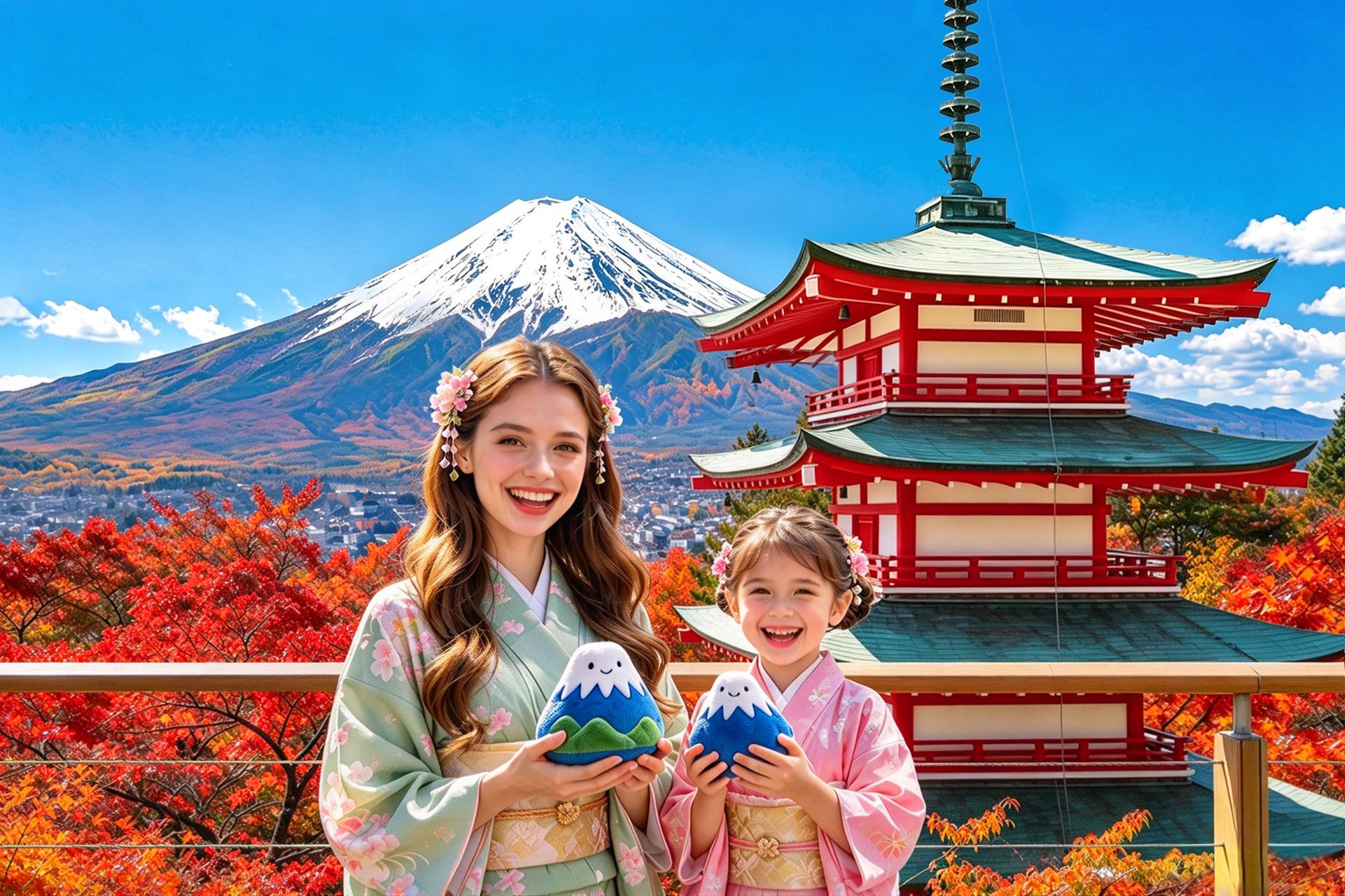
The Kawaguchiko day from Shinjuku keeps low, by the lakes: Nenba village, Lake Kawaguchi and Oishi Park, Oshino Hakkai and the Chureito Pagoda, with a guide. Check the listing's free cancellation window before you pick a date.
Check Winter Dates